Getting Here
Location
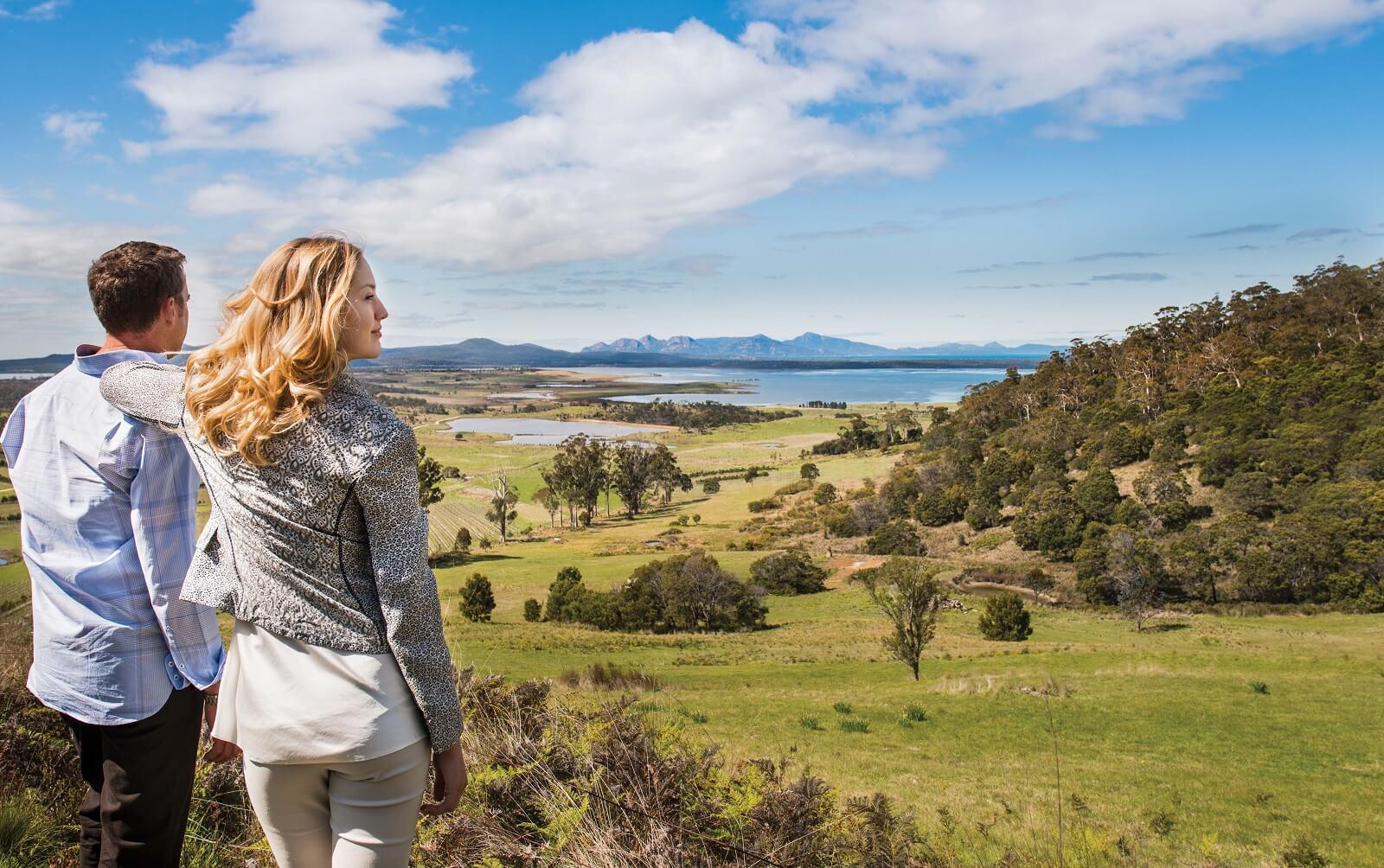
The Freycinet Peninsula extends south-eastwards from Tasmania’s coastline and is a fully protected national park, including the internationally acclaimed Wineglass Bay. Saffire is located on the inside of the gentle curve of sandy coastline that joins the peninsula to mainland Tasmania.
Saffire overlooks the wide expanses of Great Oyster Bay, where migrating whales and dolphins come to play; calamari and squid in-season spawn in the rocky outcrops; local farms produce fresh, succulent oysters in some of the world’s cleanest waters; and fishing boats and trawlers bring in their daily catch of rock lobster, scallops and deep sea fish, dripping and salty-sweet straight from the ocean.
The dominant view from Saffire’s every window is the pink-hued granite of the peninsula’s Hazards Mountains, providing a spectacular and ever-changing backdrop from morning to nightfall.
Saffire Freycinet
2532 Coles Bay Rd
Coles Bay Tasmania Australia 7215
Without a hint of exaggeration, it’s one of the most stunning places I’ve ever seen.”
Getting Here
Saffire Freycinet is located mid-way along Tasmania’s beautiful East Coast, just two and a half hours’ scenic drive from Hobart and two hours’ drive from Launceston. Hobart and Launceston are a 60-minute flight from Melbourne or 105 minutes from Sydney. Australia’s major airlines conduct daily flights into Hobart and Launceston from most capital cities.
The Spirit of Tasmania also sails daily between Melbourne and Devonport, allowing you to bring your own vehicle, and there is a range of transport options for your ultimate journey to Saffire Freycinet. If you choose to drive yourself, be prepared for some stunning coastal scenery along the way. If you prefer to fly, Saffire Freycinet is just a 30–minute scenic flight away.
Chauffeured Service
Saffire offers a luxury chauffeured service for guests departing from Launceston and Hobart. Start your Saffire experience by being picked up in a Luxury Sedan.
For more information and to book a chauffeured service for your stay, reach out to Saffire Guest Services.
Getting Here by Air
BY SEA PLANE – ABOVE & BEYOND
Travel in style and comfort in Above & Beyond’s nine-seater Cessna 208 Caravan and experience the beauty of the east coast from the air. Transfers are offered to and from Saffire, to the heart of Hobart City with a spectacular water landing and take off. Hobart Airport transfers are also available, which are a nice 30 minutes by air directly to your destination, taking in some of the state’s most pristine views, including the world-famous Wineglass Bay in Freycinet National Park.
BY HELICOPTER – FREYCINET AIR TASMANIA
Freycinet Air can transfer guests arriving into Hobart via helicopter to Saffire Freycinet, whisking you away from Hobart in under 45 minutes. Skip the unfamiliar roads and enjoy stunning views of Tasmania’s East Coast. For a scenic detour, Freycinet Air can customise a flight path over Wineglass Bay and the Hazards before landing.
Airport Lounge
Saffire Freycinet has even catered for that moment when you step off your flight at Hobart Airport. Our Airport Lounge provides unsurpassed service, a touch of luxury – and the chance to catch your breath before your journey to Saffire Freycinet.
The Saffire Freycinet team will meet you as you disembark your flight then guide you to the lounge where refreshments and the opportunity of a relaxing shower await. We take care of every detail. Our airport lounge host can assist you with your baggage and during the check-in process.
While you are waiting, you are welcome to use the in-lounge internet facilities or log in on your own device via our Wi-Fi. You can take a moment to plan an itinerary of attractions and places to visit in Tasmania. Reading materials and television facilities are also provided.
Ask about the Saffire Airport Lounge (open daily 9am-5pm) when booking your stay at Saffire Freycinet.